
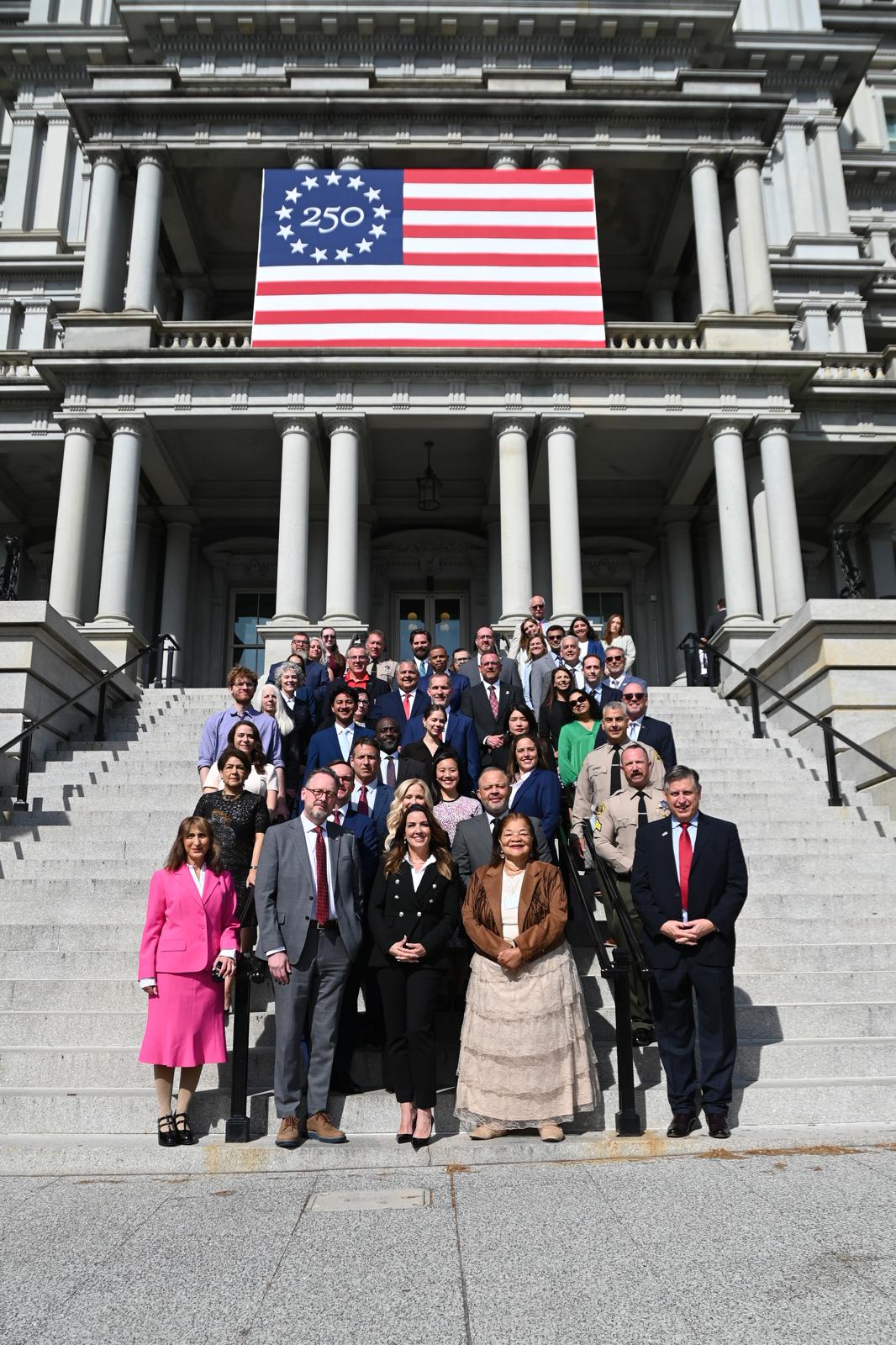
East County Transitional Living Center is proud to share that Dr. Julie Hayden, PsyD, recently represented ECTLC at the White House’s Best Practices for Addiction Treatment Within Homelessness Summit in Washington, D.C. The April 13–14 meeting brought together national leaders, practitioners, and lived-experience voices to identify approaches that can better address addiction, mental illness, and homelessness across the country.
Hosted through collaboration among the Office of National Drug Control Policy, HHS/SAMHSA, and HUD/CPD, the summit was designed to gather leading experts and turn their insights into a practical Best Practices Toolkit for communities nationwide. According to the summit agenda and toolkit framework, the goal was not only to discuss what works, but to develop examples and resources leaders can use in real-world treatment, recovery, and homelessness response systems.
Dr. Hayden participated in the “Best Practices – San Diego & Greensville” session, where she presented principles drawn from the Rhombus Model and from ECTLC’s experience serving individuals and families facing homelessness, addiction, and instability. Her presentation, “From Instability to Independence: Designing Systems That Actually Work,” focused on a simple but urgent reality: people do not just need isolated services. They need a system that helps them move from crisis to stability and from instability to independence.
At ECTLC, that work is rooted in a continuum of care that goes beyond short-term intervention. Dr. Hayden’s presentation emphasized a three-part framework: Protect → Prepare → Propel. Protection means helping people stabilize mentally and physically. Preparation means building skills, structure, and readiness. Propel means helping people move toward long-term independence. The presentation also highlighted principles that shape sustainable recovery: culture creates recovery, treatment time matters, individualized care matters, faith and community matter, and education helps break cycles.
Those ideas closely align with the summit’s broader focus. Across the two-day agenda, participants explored philosophy and program design, the integration of faith and medicine, outcome measures and dashboards, warm handoffs from the street to detox to treatment, financing, innovations, and additional topics like support for drug-endangered children. The result was a national conversation centered on accountability, continuity, and practical pathways to self-sufficiency.
Dr. Hayden joined a wide range of experts from across the nation, including nonprofit leaders, clinicians, public-sector officials, and people with lived experience. The guest materials and agenda reflect the depth of that conversation, bringing together voices from organizations and agencies working in emergency shelter, recovery programming, behavioral health, education access, and public systems leadership.
For ECTLC, the invitation was meaningful because it recognized that solutions being built here in East County have value far beyond our region. In the official press release, Dr. Hayden noted that the challenge communities face is bigger than any one intervention. Housing alone is not enough. Treatment alone is not enough. Crisis response alone is not enough. Real change happens when people are supported by a connected system that holds over time.
That same release also pointed to measurable outcomes connected to ECTLC’s work. Based on a San Diego Taxpayers Association analysis cited in the release, ECTLC in 2024 spent $790 per person exiting to permanent housing, and 96% of graduates remained stably housed from November 1, 2024, to October 31, 2025. Those numbers matter because they reflect more than temporary relief. They point to durable outcomes built through structure, accountability, community, and long-term support.
The summit also underscored something ECTLC has long believed: recovery becomes more sustainable when treatment, housing, relationships, education, work, and community are not fragmented. When those elements are connected, people have a stronger chance to rebuild their lives. That is the work ECTLC is committed to every day in East County.
We are grateful for the opportunity to contribute to this national discussion and to share what we have learned through serving our community. As policymakers and practitioners continue building the federal Best Practices Toolkit, ECTLC remains committed to helping individuals and families move forward with dignity, structure, and hope.
Real change happens when people are supported by systems that move them from crisis to independence, and that work is happening every day at ECTLC.
Donate today to help more individuals and families find stability, recovery, and a path forward.