
We are grateful to share some encouraging news with the ECTLC community and thankful to God for the ways He continues to open doors.
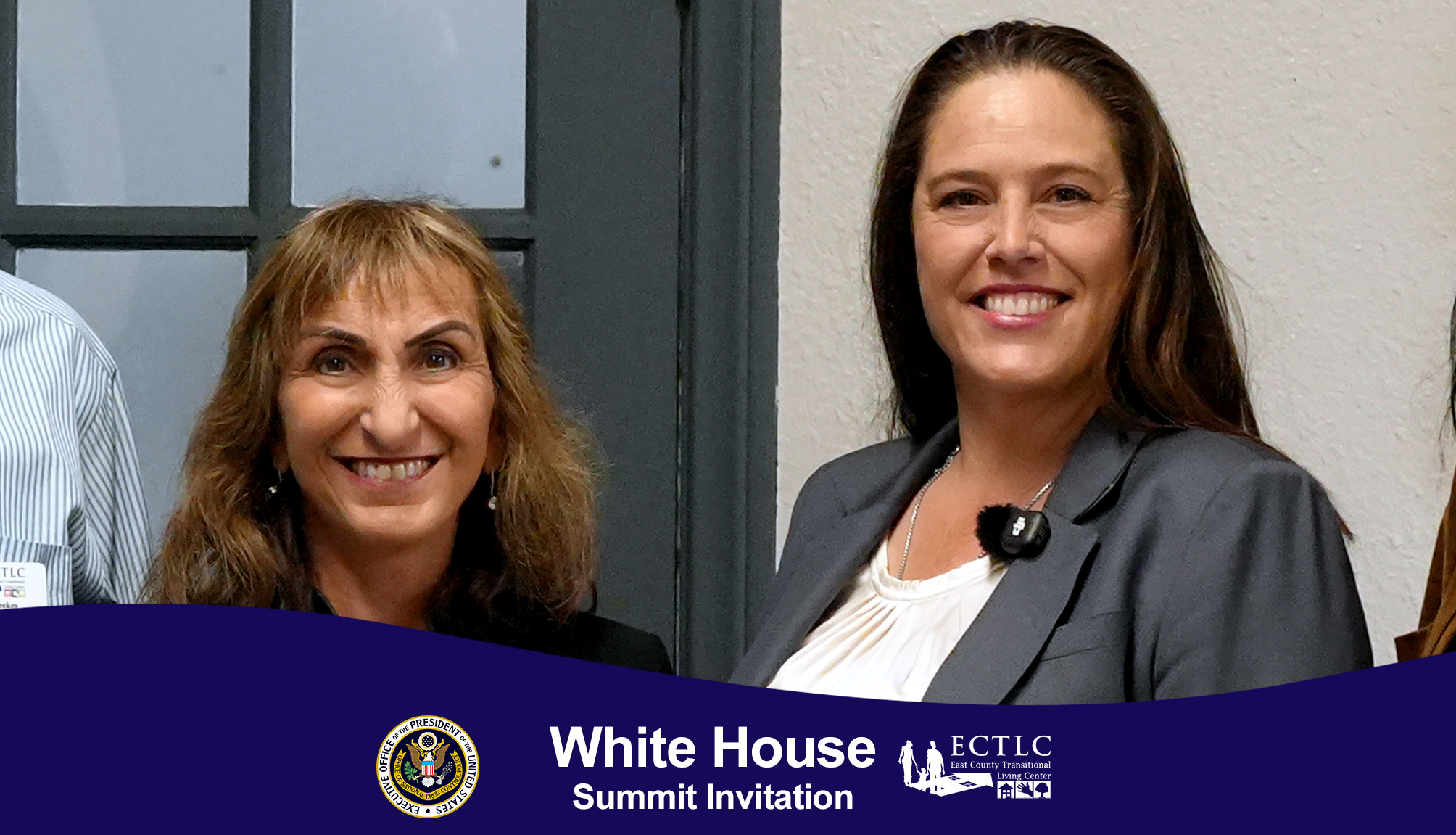
Dr. Julie Hayden, PsyD, has been selected as one of nine experts nationwide to present in Washington, DC at a federal summit hosted by the White House Office of National Drug Control Policy on April 13 and 14. She will be sharing best practices for addressing addiction and mental health within homelessness, informed by the work being carried out at ECTLC and the broader framework it represents.
Dr. Hayden will join other experts who treat addiction and mental illness from across the nation to discuss strategies to better help more people get drug-free, off the streets and housed.
The government agencies will share the group’s findings in a Best Practice Tool Kit, which will include examples and resources homelessness and addiction leaders and community advocates can use in their communities.
When the invitation came, Dr. Hayden’s phone screen simply read “The White House.” She describes that moment as both unbelievable and deeply humbling. For our team, it was also a powerful reminder that impact travels. Quiet, consistent work in East County has been noticed at the national level. We see this as more than recognition, it is an opportunity God has provided to share what we have learned and to serve at a broader level.
Behind this invitation is not just a single program, but a model developed over time by a husband and wife team, Ray Hayden and Julie Hayden, what is now known as The Rhombus Model™.
The Rhombus Model™ is a framework that approaches people and complex challenges from multiple angles at once. Rather than viewing someone through only one lens, such as counseling, medicine, employment, or faith, it integrates these perspectives into a unified, practical system. Recognizing that lasting transformation often involves both practical structure and spiritual restoration is a key tenet of the model. It takes tools and insights from multiple disciplines and translates them into clear, actionable steps that organizations, ministries, and communities can implement.
ECTLC has become one of the most visible and mature examples of this model in practice.
Through a series of conversations and site visits at ECTLC, federal leaders observed something uncommon. They saw a treatment-first approach that integrates detox, residential recovery, job training, life skills, mental health services, spiritual support, and community. They saw a culture grounded in dignity, accountability, and measurable outcomes. Most importantly, they saw individuals not just temporarily sheltered, but steadily building toward long-term independence.
These leaders saw The Rhombus Model™ operating in a real-world environment.
At the summit, Dr. Hayden is expected to highlight one theme in particular: transparency. Clear and honest reporting about what is working and what is not, supported by real outcomes. At ECTLC, there has always been a commitment to open doors, shared learning, and measurable results. That commitment, paired with a foundation of love, customer service, professionalism, and feedback, is now part of a broader national conversation.
This recognition reflects a collective effort. Residents who choose the difficult path of recovery. Staff who walk alongside them each day. Donors, churches, and partners who provide the resources that make transformation possible. Volunteers who give their time and skills to support the mission.
We are honored that a model developed here in San Diego, and demonstrated through the work at ECTLC, is helping inform national conversations about recovery and housing stability. It is a meaningful confirmation that when structure, accountability, and compassion come together, lasting change is possible.
In the coming weeks, we will share more about the summit, including key takeaways from Dr. Hayden’s presentation and how this experience may shape future opportunities. We look forward to offering a deeper update after her return from Washington.
Thank you for standing with us as we continue the work of restoring lives, one individual and one family at a time, trusting God to guide and sustain this mission. Your support makes moments like this possible.