
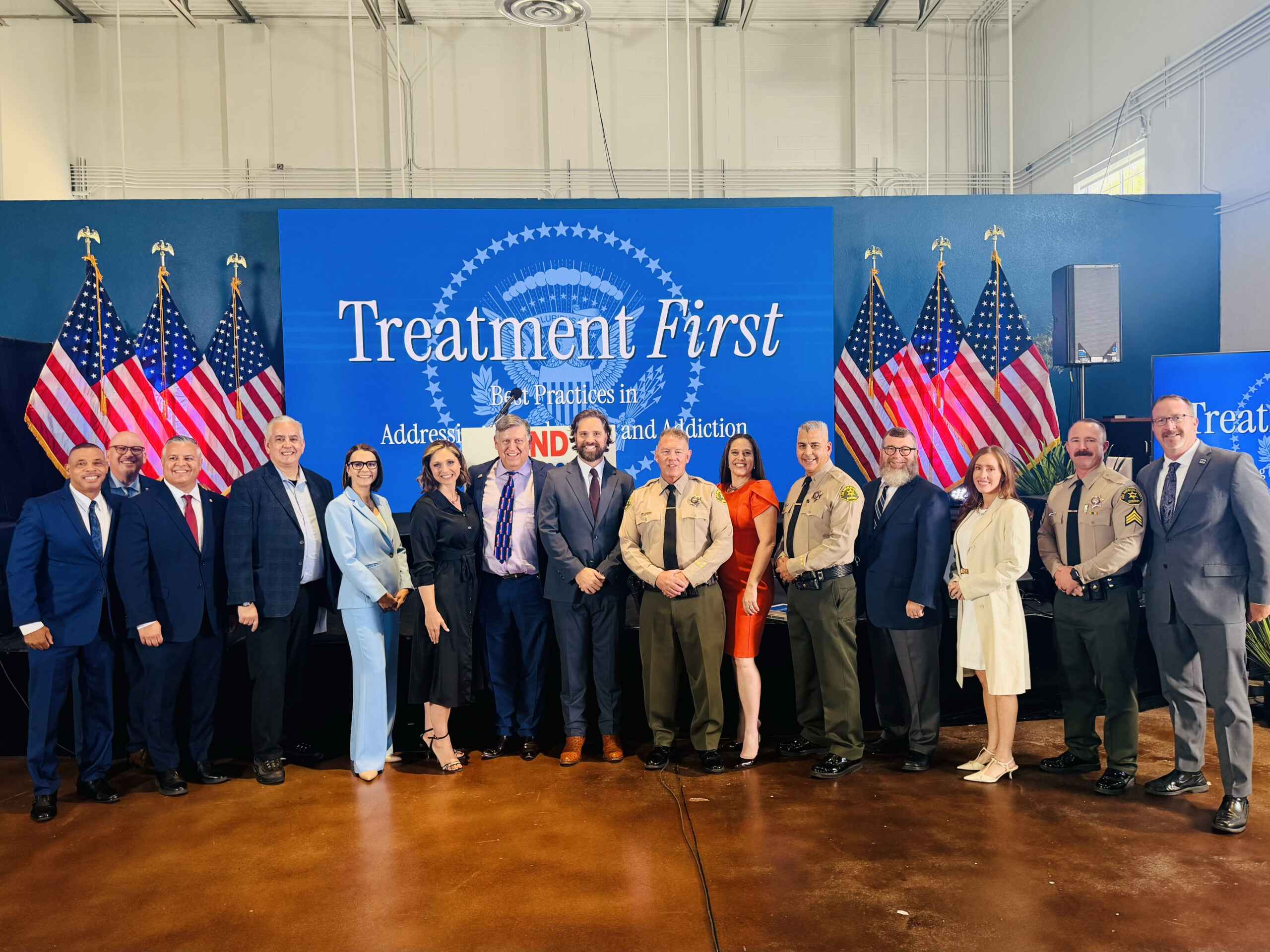
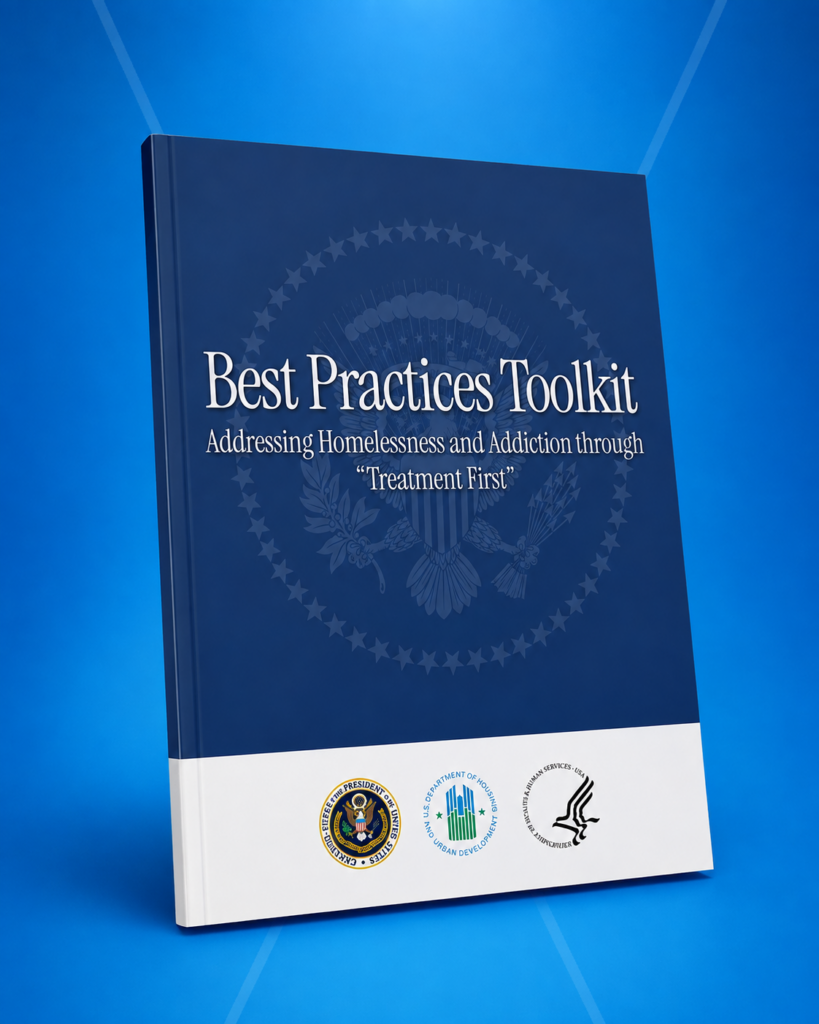
On August 12, the White House Office of National Drug Control Policy, the U.S. Department of Health and Human Services, and the U.S. Department of Housing and Urban Development announced the first-ever Best Practices Toolkit: Addressing Homelessness and Addiction through “Treatment First” during a press conference in San Diego. ONDCP Director Sara Carter, HHS Secretary Robert F. Kennedy, Jr., and HUD Secretary Scott Turner announced the new resource, which is designed to give communities practical strategies for helping people move from homelessness and addiction toward recovery and self-sufficiency.
The toolkit advances a “Treatment First” approach centered on evidence-based treatment, recovery support, accountability, coordination between service providers, stable housing, employment, and long-term self-sufficiency. Rather than measuring success by services provided alone, the toolkit calls for communities to track meaningful outcomes such as recovery, improved mental health, housing stability, employment, social connection, and family and community reintegration.
The San Diego announcement grew out of work that began earlier this year. In April, the White House Office of National Drug Control Policy convened national experts for a summit on best practices for addiction treatment within homelessness. Federal leaders were joined by physicians, social workers, people with lived experience, and leaders of programs with demonstrated success. The discussions from that summit became the foundation for the new toolkit.
Dr. Julie Hayden, CEO of East County Transitional Living Center, participated in that White House summit as a subject matter expert on homelessness and addiction treatment, and is listed among the toolkit’s community contributors through Rhombus. Rhombus is also listed among the featured San Diego programs contributing to the toolkit.
The Rhombus Model™ is a framework that approaches people and complex challenges from multiple angles at once. Rather than viewing someone through only one lens, such as counseling, medicine, employment, or faith, it integrates these perspectives into a unified, practical system. Recognizing that lasting transformation often involves both practical structure and spiritual restoration is a key tenet of the model. It takes tools and insights from multiple disciplines and translates them into clear, actionable steps that organizations, ministries, and communities can implement.
East County Transitional Living Center has become one of the most visible and mature examples of this model in practice. For ECTLC, the national conversation connects directly to work that has been taking place in East County for years.
Homelessness is rarely the result of a single problem. People may be dealing with addiction, trauma, unemployment, damaged relationships, financial instability, behavioral health challenges, or years without a dependable support system. Addressing only one of those issues may provide temporary relief without creating lasting change.
ECTLC takes a whole-person approach to recovery.
Participants live in a structured environment where they address the issues that contributed to their crisis while developing the skills needed for independent living. That includes recovery support, job training, life skills, personal responsibility, healthy relationships, and preparation for long-term self-sufficiency.
Faith is also an important part of the ECTLC program. For many participants, faith provides purpose, community, accountability, and hope during a challenging period of rebuilding.
The goal is not simply to move someone out of homelessness. It is to help that person build a life they can sustain.
Many of those principles appear throughout the new Best Practices Toolkit. It identifies self-sufficiency as a central goal, calls for individualized and trauma-informed care, recognizes the importance of structure and routine, emphasizes employment readiness and skill building, and encourages stronger coordination between treatment providers, housing programs, community organizations, employers, faith communities, and other partners. It also identifies the integration of faith and medicine as one of the core elements communities should consider when supporting long-term recovery.
ECTLC itself is included in the toolkit in a “Snapshot from the Field.” The toolkit highlights ECTLC’s view that substance use and mental health treatment are essential first steps in recovery and notes ECTLC’s work with community-based behavioral health and substance use treatment providers to help participants access care. It also highlights ECTLC’s therapeutic work assignments, which allow participants to build practical job skills, establish a positive work history, and contribute productively within the community.
“The White House release of the national Best Practices Tool Kit for addiction, homelessness, and mental health providers did more than recognize what is working; it created momentum for communities, providers, funders, and civic leaders to rally around measurable solutions that can move people from crisis to stability.” — Dr. Julie Hayden
The toolkit shows that experience from programs such as ECTLC helped inform a larger national discussion about what long-term recovery can look like in practice.
The conversation is especially relevant in San Diego County, where homelessness, addiction, behavioral health, housing, employment, and recovery often intersect. No single organization can address those challenges alone.
That need for collaboration is one reason Dr. Hayden and other local leaders have been working through the Homelessness Solutions Collaborative. The Collaborative brings together people from different sectors to share information, identify gaps, strengthen partnerships, and look for practical ways to improve Southern California’s response to homelessness.
The next Homelessness Solutions Collaborative meeting will take place on August 19, providing an immediate opportunity for local leaders to continue the conversation following the White House announcement. Another Collaborative is planned for early 2027.
National policy can help set priorities, share promising practices, and create opportunities for communities to learn from one another. The work itself happens locally, in programs, neighborhoods, families, and individual lives.
At ECTLC, the work of healing and restoration continues every day.
Each person who maintains recovery, returns to work, rebuilds relationships, becomes financially independent, or moves into stable housing represents a step toward something more lasting than temporary relief.
ECTLC will continue working with partners throughout San Diego County to help people move from crisis to self-sustainability and build lives and livelihoods they can sustain.
Help Make Lasting Change Possible
The work at ECTLC is made possible by compassionate people who believe recovery, accountability, and a path toward independence are worth investing in. And that God transforms lives.
There are many ways to support ECTLC. You can make a one-time gift, become a recurring supporter, donate goods or resources, or involve your business, church, or community organization in supporting the people and families working to rebuild their lives.
Every contribution helps ECTLC continue providing the structure, support, and opportunities people need to move from crisis toward lasting independence.
Together, we’re helping people move off the streets and into lives filled with dignity, purpose, and hope.